
Lithium Battery Fire Remediation
Battery Fire Response
Lithium Battery Fire Remediation by Certified Crews
A lithium-ion battery fire is not a standard fire loss. When a cell enters thermal runaway, it releases heavy metals and toxic gases that settle along the smoke path, and damaged cells can reignite hours or days after the flames are out.
Titan Restoration of Arizona responds to these losses in homes, apartments, and commercial buildings, coordinating stabilization, hazardous materials removal, and clearance testing under one scope of work.
Call Now for Battery Fire HazMat Removal
Damaged lithium cells stay unstable long after the fire is out, and contaminated residue keeps spreading while the property sits untouched. Call now, and a certified crew will respond, secure the hazard, and begin the remediation process right away.
Beyond the Surface
Not Your Standard Fire Loss
Most fire restoration assumes the hazard ends once the flames do. Lithium-ion fires do not work that way. A damaged cell can re-enter thermal runaway with no outside ignition source, so battery debris has to be stabilized and removed before demolition can safely begin.
The residue is different too. Alongside ordinary soot, a battery fire deposits heavy metals such as cobalt, nickel, and manganese, and releases gases including hydrogen fluoride and carbon monoxide that follow the smoke path into rooms with no visible damage.
Because this contamination cannot be seen or smelled, clearance depends on surface sampling and laboratory verification rather than a simple walkthrough.
Testimonials
What Your Neighbors Are Saying


What Our Remediation Process Covers
Battery fire remediation follows a strict sequence, and the order matters as much as the work itself. Skipping a step risks re-ignition or leftover contamination, so the scope typically includes:
- Stabilization and Containment: Damaged cells are contained and monitored before any other work begins to prevent re-ignition during demolition.
- De-Energizing and Temporary Power: We secure building power under lock-out and tag-out, then bring in temporary power so work can continue safely.
- Industrial Hygiene Testing: Independent sampling guides a written protocol, so every decision made on-site is documented and defensible.
- Protocol-Driven Demolition: Contaminated materials are removed to the protocol, containerized, and disposed of through regulated channels.
- HEPA Filtration and Cleaning: Continuous air scrubbing runs alongside detailed surface cleaning, including HVAC components where residue tends to collect.
- Category 3 Water Mitigation: Suppression water that contacted contaminated debris is treated accordingly, and affected porous materials are removed.
- Clearance Verification: Independent testing confirms the work is complete, and anything that fails is re-cleaned until it passes.
Restoration Done Right
Why Choose Our Lithium Battery Fire Team
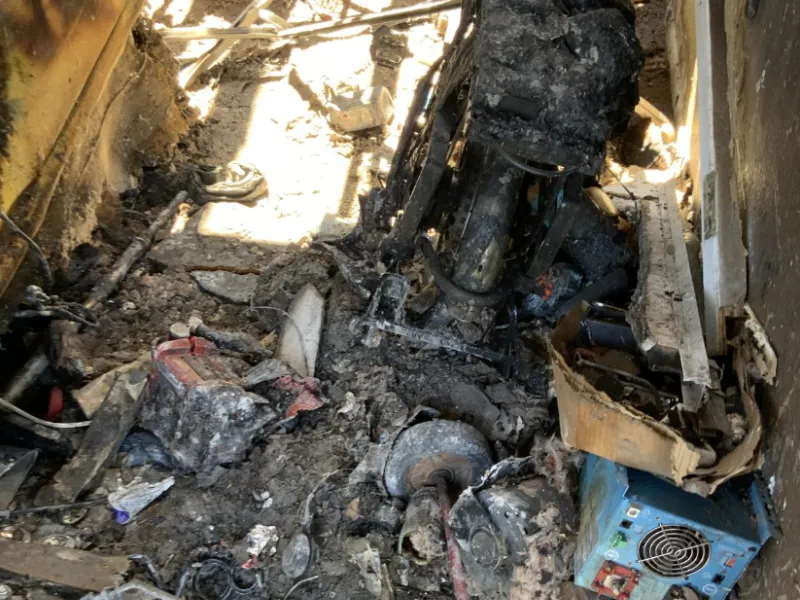
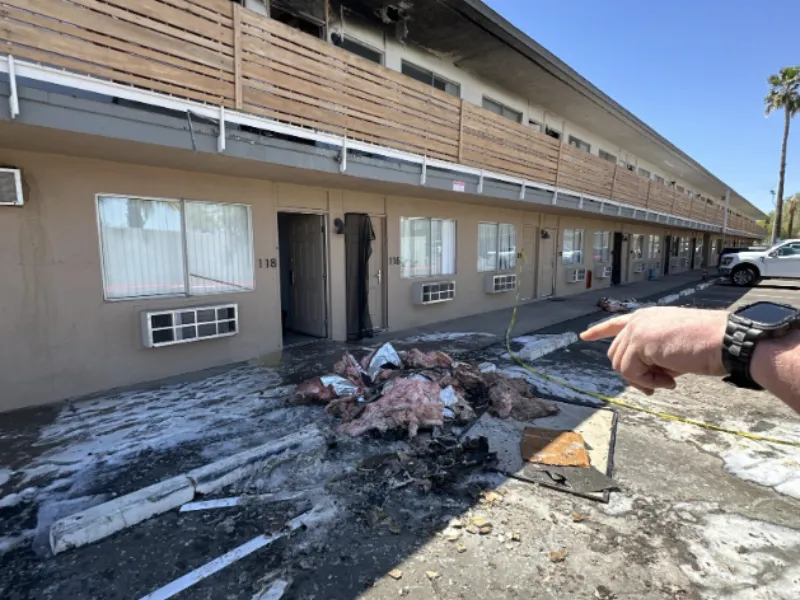
Lithium-ion losses are still new territory for most of the restoration industry, and few Arizona contractors have handled one from start to finish. We have. Our most recent lithium-ion battery fire cleanup involved a ride-on scooter, a charger, and multiple battery packs inside an occupied central Phoenix apartment building.
That single loss produced four separate hazard classes: structural fire, battery HazMat, Category 3 water, and asbestos, spread across 11 units. Titan Restoration of Arizona was onsite in 34 minutes, coordinated stabilization with a hazardous materials contractor and testing with an independent industrial hygienist, removed more than 22 tons of material, and delivered fully verified clearance in eight weeks. Every other resident in the building stayed home throughout the project, and normal operations at the property were never interrupted.
We hold a KB-1 dual contractor license in Arizona, so mitigation and reconstruction are handled under one roof with a single point of contact from the first call through the final walkthrough. We document the loss from the moment we arrive and work directly with your adjuster on insurance coordination. Four locations across the state and more than 50,000 completed jobs give us the crew capacity to handle battery fire contamination cleanup at any scale, whether it affects one unit or an entire building.
Frequently Asked Questions
What makes a lithium battery fire different from a regular fire?
Three things set it apart. Damaged cells can reignite after the flames are out, the residue contains heavy metals rather than ordinary soot, and clearance depends on laboratory testing instead of a visual walkthrough.
Can a lithium battery reignite after the fire is out?
Yes. A compromised cell can re-enter thermal runaway hours or days later without any outside trigger. That is why battery debris needs to be stabilized and isolated before demolition begins.
What kind of contamination does a battery fire leave behind?
Heavy metals such as cobalt, nickel, and manganese settle along the smoke path, and the fire can release gases like hydrogen fluoride and carbon monoxide. Because this residue is invisible, rooms with no visible damage can still test positive.
Is it safe to stay in the building after a battery fire?
Units with direct fire or smoke impact need to be cleared before anyone moves back in. Whether the rest of the building can stay occupied depends on the containment plan and sampling results, which our team will assess on arrival.
Which devices tend to cause these fires?
E-bikes, electric scooters, and their chargers are the most common culprits in multifamily buildings. Power tool batteries, hoverboards, laptops, and portable power stations can also be involved, especially when damaged or improperly charged.
Does insurance cover lithium battery fire damage?
Fire is typically a covered peril, and battery fires are usually treated the same way. The complication is scope, since these claims involve hazardous materials handling and regulated disposal that a standard fire estimate may not include. We document the full picture from the start and work directly with your adjuster.
How long does the cleanup process take?
A single-unit loss may wrap up in a few weeks. A multi-unit fire involving demolition, HazMat removal, and reconstruction can run eight weeks or longer, depending on how far the contamination traveled.