
When water keeps rising, it acts like a ticking clock in your walls. 24 Hour Flood Cleanup Services can help address standing water quickly, because prolonged moisture can soak framing, damage finishes, and create conditions that support mold growth. You can shut off the source when safe, move valuables, and document the damage, but recovery starts with rapid extraction, drying, and sanitizing. The next steps can determine how much of your property can be safely restored.
Key Takeaways
- 24 hour flood cleanup provides immediate water extraction to stop standing water from spreading and causing more damage.
- Rapid drying with air movers and dehumidifiers reduces moisture, helping prevent mold growth within 24 to 48 hours.
- Technicians assess hidden moisture in walls, floors, and insulation to protect structural materials from swelling and weakening.
- Sanitization and continuous monitoring help reduce contamination, control odors, and ensure effective drying.
- Choose a licensed 24/7 team with fast dispatch, clear communication, and insurance support for smoother recovery.
Why 24 Hour Flood Cleanup Matters
When floodwater enters your property, every hour matters because standing water can spread, soak materials, and trigger more moisture damage.
You need 24 hour flood cleanup services so you can act before humidity drives deeper intrusion and structural stress worsens. Fast response helps you protect your space, limit contamination, and reduce the chance that hidden dampness turns into a larger repair problem.
You’re not dealing with this alone; a prompt crew gives you clear direction when conditions feel overwhelming. Immediate action also supports safer access, because wet surfaces, saturated wiring, and unstable materials raise risk.
When you move quickly, you keep more of your property recoverable and regain control sooner. That’s why round-the-clock cleanup matters for your home or business.
What 24 Hour Flood Cleanup Includes
When you call for 24 hour flood cleanup, you get emergency water extraction to remove standing water fast and limit further damage.
Next, the crew starts a rapid drying process with industrial equipment to reduce moisture in walls, floors, and contents.
They also perform a moisture damage assessment to identify hidden saturation and guide the next repair steps.
Emergency Water Extraction
Even in the middle of the night, 24 hour flood cleanup crews can start emergency water extraction right away to remove standing water before it spreads into walls, flooring, and hidden structural areas.
You’ll see trained techs map the flood zone, shut off unsafe power if needed, and place high-capacity pumps and vacuum extractors where water pools deepest. They target carpet, pad, tile seams, subfloors, and crawlspace edges, pulling moisture fast to limit saturation and microbial risk.
You stay informed with clear updates, because every minute counts when your property’s stability is on the line. This step helps you protect belongings, reduce demolition, and regain control after a sudden leak, burst pipe, or storm surge.
You’re not facing it alone; your cleanup team moves with urgency, precision, and care.
Rapid Drying Process
After extraction, 24 hour flood cleanup crews move into rapid drying to stop lingering moisture from damaging drywall, framing, insulation, and finishes.
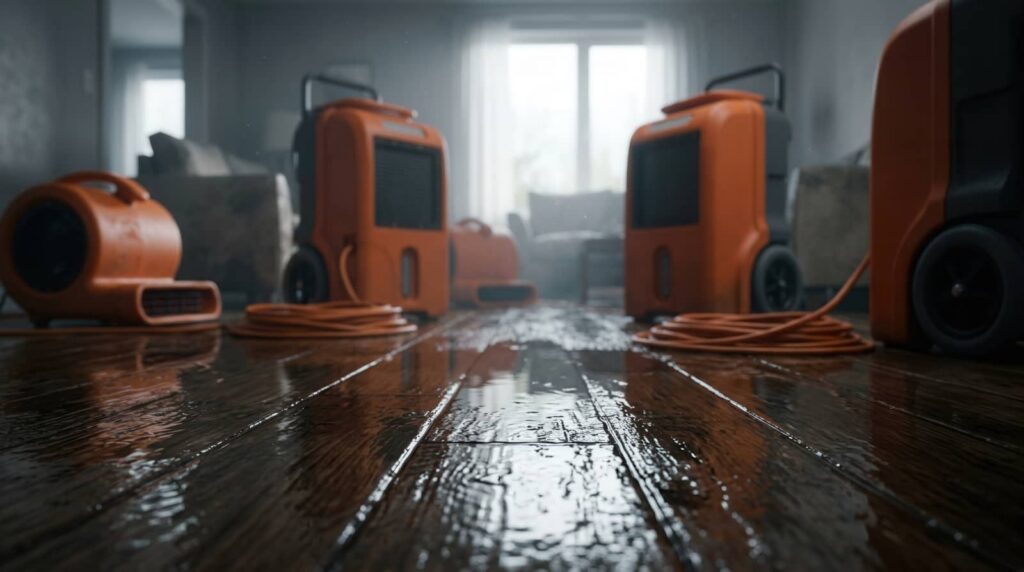
You’ll see high-capacity air movers placed to push evaporation across wet surfaces, while commercial dehumidifiers pull vapor from the air and stabilize indoor humidity fast.
Technicians position equipment for crossflow and targeted drying, so trapped moisture doesn’t settle into hidden cavities.
You stay informed as crews monitor airflow, temperature, and moisture levels, adjusting the setup to keep the drying zone moving.
This isn’t a wait-and-see step; it’s a controlled response that helps protect your space and keep your property’s recovery on track.
With the right team, you’re not facing flood cleanup alone—you’re backed by people who know how to act quickly and work together.
Moisture Damage Assessment
A thorough moisture damage assessment is a core part of 24 hour flood cleanup, because crews need to find where water traveled, what materials it soaked, and which areas still hold hidden moisture.
You’ll get a fast, systematic inspection using meters, thermal imaging, and visual checks to map wet drywall, subfloors, insulation, and framing.
This step helps you and your cleanup team catch trapped water before it fuels mold, swelling, or structural decay.
You’re not guessing; you’re documenting moisture levels, setting drying goals, and deciding what can be saved.
In a crisis, that clarity matters.
When your property’s hit, you need a crew that treats your space like part of the community and moves with urgency, precision, and care.
First Steps Before Help Arrives
Before help arrives, shut off the main water source if it’s safe to do so, cut power to affected areas if standing water is present, and move people and valuables away from the flood zone.
Then document visible damage with quick photos and note any odors, stains, or active leaks. Open exterior doors only if you can do it safely, and keep children and pets clear of the area.
Remove small dry items from the perimeter, but don’t drag saturated furniture across floors. If you can, place aluminum foil or wood blocks under furniture legs to limit staining.
Stay out of contaminated water, and wear gloves and boots. You’re not handling this alone; these first actions help protect your space and keep cleanup crews moving fast.
How Emergency Flood Cleanup Works
When you call for emergency flood cleanup, crews move fast to extract standing water with pumps and vacuums before it spreads deeper into your structure.
They then deploy industrial drying equipment to lower moisture levels in walls, floors, and contents.
After that, they sanitize affected areas to reduce contamination and help stop mold growth.
Rapid Water Extraction
Rapid water extraction starts immediately to remove standing water and limit further moisture damage.
You’ll see technicians arrive with truck-mounted pumps, submersible extractors, and weighted wands to pull water from floors, carpets, and hidden pockets. They map the wet areas, isolate hazards, and work room by room so nothing gets missed.
You stay informed with clear updates, and the team moves fast because every minute raises the risk of structural stress and secondary damage. They vacuum edges, corners, and seams, then remove saturated materials that can’t be salvaged.
This isn’t guesswork; it’s a disciplined response built for your home or business.
When you call 24 hour flood cleanup services, you’re not alone—you’re backed by trained specialists who know exactly how to act.
Drying And Sanitizing
Once the standing water is out, technicians move straight into drying and sanitizing to stop mold growth, odors, and hidden contamination from spreading.
You’ll see air movers positioned to drive moisture from carpets, framing, and baseboards, while dehumidifiers pull vapor from the room. Crews measure humidity and material moisture so they can target hidden wet zones before damage sets in.
Then they apply EPA-registered disinfectants to affected surfaces, helping protect your home and the people who live in it. This step matters because damp materials can turn into a breeding ground fast.
With 24 hour flood cleanup services, you’re not left guessing; you’re backed by a team that works quickly, restores safe conditions, and helps your space feel like yours again.
Why Fast Drying Protects Your Property
Fast drying limits how long water has to soak into flooring, drywall, insulation, and structural materials, which helps reduce swelling, warping, and hidden moisture damage.
You protect your property when you move quickly with extraction, air movement, and dehumidification. Each hour matters because trapped moisture can spread deeper into assemblies and weaken finishes that should stay stable and secure.
When you act fast, you give your space a better chance to dry evenly, stay serviceable, and avoid avoidable disruption.
You’re not handling this alone; skilled flood cleanup teams use monitoring tools to verify progress and adjust equipment before conditions worsen.
That practical response helps you stay in control, preserve your investment, and get back to a safe, dry place faster.
Common Risks After Standing Water
Even with fast drying underway, standing water can still trigger serious damage if it’s left in place too long.
You face swelling in wood, delamination in flooring, and weakened drywall that can sag or crumble fast. Moisture also seeps into insulation, trapping contamination and reducing thermal performance.
Electrical systems nearby can corrode, and hidden pockets behind walls can keep feeding mold growth within 24 to 48 hours.
If you wait, odors settle in, finishes stain, and cleanup becomes more complex for your property team.
You’re not dealing with cosmetic issues alone; you’re protecting your space, your health, and your peace of mind.
Acting now helps you stay ahead of structural loss and join the group of owners who treat water damage like the urgent threat it is.
What to Expect From 24 Hour Flood Cleanup
When you call for 24 hour flood cleanup, you can expect a rapid site assessment, water extraction, moisture mapping, and immediate containment to stop further damage.
You’ll get technicians who move fast with pumps, vacuums, air movers, and dehumidifiers to reduce saturation in floors, walls, and contents. They’ll document affected areas, check hidden cavities, and track moisture levels so you know what’s wet and what’s drying.
You can expect clear communication, safety controls, and a crew that works like your property matters—because it does. The goal is to stabilize the space, limit microbial growth, and prepare your home or business for the next recovery steps.
When water hits, you’re not on your own; you’ve got a responsive team.
How to Choose the Right Flood Service
After the first response crew stabilizes the water damage, your next move is choosing a flood service that can handle the full scope of recovery.
You need a team with 24/7 dispatch, rapid arrival, and proven training in extraction, drying, and sanitization.
Ask whether they document moisture levels, use industrial air movers and dehumidifiers, and coordinate with your insurer.
You should also confirm they manage standing water, storm flooding, and hidden moisture behind walls and flooring.
Look for clear estimates, licensed technicians, and a communication style that keeps you informed.
When you choose well, you’re not just hiring help—you’re joining a crew that treats your property like its own and moves fast enough to limit further loss.
Frequently Asked Questions
How Quickly Can a Crew Arrive After My Emergency Call?
You’ll typically get a crew within 1 to 2 hours, depending on traffic, weather, and call volume. We’ll dispatch fast, assess your water damage, and start extraction right away to protect your property and peace of mind.
Does Flood Cleanup Cover Sewage-Contaminated Water?
Yes, it does if you’ve got sewage-contaminated water. You need trained crews, protective gear, and disinfection right away. They’ll extract waste, sanitize surfaces, and help you keep your property safe, compliant, and recoverable fast.
Will My Insurance Likely Cover Emergency Flood Services?
You’ll likely get coverage if your policy includes flood or water damage, but exclusions apply. You should document losses, call your insurer fast, and use approved emergency services to protect your claim and home.
Can Belongings Be Salvaged After Severe Water Exposure?
Yes—your belongings can sometimes be salvaged, dried, cleaned, and disinfected, but you’ve got to act fast. You should sort, document, and isolate items immediately; porous materials often won’t recover after severe saturation.
What Should I Do if Flooding Happens Overnight?
If flooding happens overnight, you should shut off power if it’s safe, move valuables higher, and call emergency flood cleanup right away. You’ll protect your space, reduce damage, and keep your belongings from worsening.
Wrap-Up
When water hits, you can’t afford delays. You should know that mold can start growing in as little as 24 to 48 hours after flooding, which means every minute matters. With 24 hour flood cleanup, you get rapid extraction, fast drying, and targeted sanitization before damage spreads deeper into your property. If you act quickly and choose a qualified crew, you’ll reduce structural loss, protect indoor air quality, and speed up recovery.