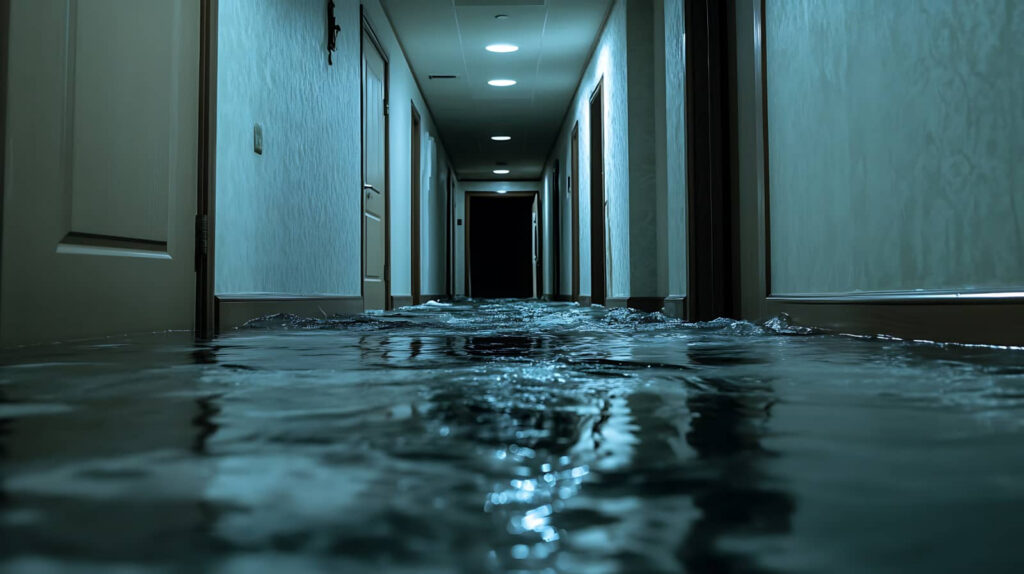
Nearly 40% of commercial water losses become major claims when response slows, so you need a plan that moves in minutes, not hours. You’ll secure the site, isolate power, control access, and start extraction before saturation spreads. From there, you’ll coordinate drying, demolition, and trade sequencing across affected zones while protecting operations. The real challenge isn’t the water you can see—it’s the hidden damage that can shut down your entire facility.
Key Takeaways
- Large loss water damage overwhelms standard cleanup and requires industrial extraction, drying, and phased restoration planning.
- Secure the site immediately by shutting off power, restricting access, and moving occupants to safe areas.
- Use high-capacity pumps and multi-zone containment to stop water migration and protect critical assets.
- Map moisture, control airflow, and monitor conditions daily to dry materials efficiently and safely.
- Coordinate trades with one site lead, daily updates, and detailed documentation to minimize downtime and support insurance claims.
How to Secure the Site Fast
When water hits a commercial site, you need to secure the area immediately to limit further damage and protect people and assets.
You should shut off electrical power to affected zones, restrict access with barriers, and assign one trained lead to coordinate entry. Move employees and visitors to safe locations, then document hazards before anyone resumes work.
Use PPE, check for slips, hidden debris, and unstable materials, and control traffic routes for responders and vendors.
If water is still entering, stop the source or isolate the system at once.
Large loss water damage restoration teams can then mobilize extraction, moisture mapping, and drying without delays.
When you act fast, you protect the site, your crew, and the recovery timeline.
What Counts as a Large Loss Water Damage?
A large loss water damage event is any incident that overwhelms standard cleanup capacity and requires coordinated commercial-scale response. You’re dealing with a large loss when water affects multiple floors, critical systems, or occupied zones, or when volume, contamination, or access limits exceed routine mitigation.
Typical triggers include burst mains, sprinkler failures, roof collapse, flood intrusion, and hidden saturation across structural assemblies. If the loss demands specialty extraction, industrial drying, containment, demolition, or phased restoration planning, it belongs in this category.
You should also treat extended business interruption, regulatory exposure, and multi-trade coordination as markers of scale. In these events, you need a team that understands commercial pressure, works with your staff, and keeps your facility on a controlled recovery path.
The First 24 Hours After a Large Loss
In the first 24 hours after a large loss, you need to act immediately to limit water migration, protect critical assets, and document the damage.
You should shut down affected systems, control access, and start extraction and moisture stabilization as fast as possible.
These steps keep the site safe and set up an efficient restoration plan.
Immediate Response Actions
Act quickly to stabilize the site and limit further damage within the first 24 hours.
You should trigger your emergency plan, confirm safe access, and assign a single point of contact to coordinate crews, vendors, and stakeholders.
Document conditions with photos, moisture readings, and brief notes so you can support claims and track progress.
Protect critical assets by moving inventory, records, and electronics to secure areas if they’re already dry and reachable.
Shut off affected utilities only when qualified personnel direct it, and notify insurers and restoration partners at once.
You need clear communication, disciplined documentation, and rapid decisions to keep your team aligned.
When you act together, you reduce chaos, preserve evidence, and prepare the site for the next phase of recovery.
Stabilizing The Site
Stabilize the site fast during the first 24 hours by controlling hazards, containing water migration, and keeping recovery operations organized. You’ll protect your team by locking out energized equipment, marking slip and structural risks, and confirming safe access routes.
Set up containment with poly sheeting, sandbags, and targeted extraction to stop spread into adjacent suites, shafts, and tenant areas. Prioritize moisture mapping, debris removal, and air movement so you can verify conditions and prevent secondary damage.
Assign clear roles, document every action, and coordinate with building leadership, insurance, and trades. When you work this way, your crew stays aligned, the site stays controllable, and recovery moves forward with confidence.
A disciplined start lets everyone belong to the same plan and outcome.
How Commercial Water Extraction Scales Up
When you face a large commercial loss, you need rapid pump deployment to start removing standing water before it spreads.
You then scale with multi-unit water extraction across zones to keep up with volume and site size.
You’ll also establish floodwater containment zones to isolate affected areas and control runoff during recovery.
Rapid Pump Deployment
Rapid pump deployment lets commercial water extraction scale quickly as crews mobilize high-capacity pumps to remove standing water from large loss sites.
You get faster loss control when teams position trailer-mounted, submersible, and portable units near the deepest accumulation points.
You’ll see crews verify power, hose routing, discharge paths, and flow rates before startup so equipment runs safely and continuously.
That discipline helps you protect flooring, contents, and structural materials while limiting secondary damage.
When you work with a coordinated restoration team, you’re not waiting for small tools to keep up; you’re deploying the right pump capacity for the volume on site.
You stay in control because extraction begins immediately, and your facility can move toward drying and recovery sooner.
Multi-Unit Water Extraction
Multi-unit water extraction scales commercial response by deploying several crews and machines at once, so you can remove water faster across expansive floors, multiple rooms, and layered building assemblies.
You coordinate truck-mounted vacuums, portable extractors, and high-volume squeegee teams to target wet carpet, hard surfaces, and voids without wasting motion. Each unit works a defined zone, and you keep pressure on the loss while maintaining safe access for your crew and tenants.
This parallel workflow lowers moisture load before drying begins, limits secondary damage, and helps your team stay synchronized on large sites. When you manage extraction this way, you join a disciplined restoration system built for speed, consistency, and control on complex commercial losses.
Floodwater Containment Zones
Floodwater containment zones let you scale commercial water extraction by isolating affected areas, controlling spread, and directing crews where the water’s deepest.
You establish barriers, map flow paths, and protect clean assets before you start pumping. That keeps extraction efficient and limits secondary damage across lobbies, suites, and back-of-house spaces.
You can assign teams to each zone, match equipment to moisture load, and adjust as conditions change. In large-loss events, this structure helps your crew move fast without losing control.
It also supports your restoration team’s shared standards, so everyone works from the same plan. When you contain first and extract second, you shorten downtime, reduce risk, and keep your site on a coordinated recovery track.
How to Dry Complex Commercial Sites
Drying complex commercial sites starts with dividing the property into zones so you can target extraction, airflow, and dehumidification where each area needs it most.
You should map moisture readings, classify materials, and set drying goals for each space. Then you can place air movers to push boundary-layer moisture off surfaces and position dehumidifiers to maintain stable vapor removal.
Monitor psychrometric conditions daily so you know when to adjust equipment, open access paths, or isolate wet pockets. Protect sensitive assets with targeted containment and controlled ventilation.
When you track progress against baseline readings, you stay in control and keep the team aligned. That disciplined approach reduces downtime, supports consistent recovery, and helps your facility return to service with confidence.
How to Coordinate Cleanup Across Trades
To coordinate cleanup across trades, you need a clear sequence that aligns demolition, electrical, HVAC, plumbing, and specialty cleaning crews without causing rework or delays.
You should issue a shared scope, mark access limits, and confirm who clears each zone before the next trade enters. Keep one site lead responsible for sequencing, sign-offs, and conflict resolution.
You’ll reduce errors when you post daily task boards, verify utility isolation, and document hidden damage before rebuild starts.
Use consistent labeling for salvage, debris, and contaminated materials so every crew handles them the same way.
When you speak in one plan and one language, your team works tighter, safer, and with confidence. That unity helps you protect quality while keeping the whole project aligned.
How to Reduce Business Downtime During Restoration
Once the cleanup sequence is set, you can cut downtime by restoring in phases and keeping critical operations online wherever possible.
You should isolate affected zones, reroute staff and customers safely, and prioritize the systems that keep revenue moving.
Temporary power, dehumidification, and containment let you work while drying continues.
You’ll reduce disruption when you schedule noisy work after hours and align crews with your operating windows.
Keep one point of contact in place so your team gets clear updates and fast decisions.
When you monitor moisture, airflow, and access daily, you avoid surprises that stall reopening.
With disciplined sequencing, you and your facility team stay in control, protect service continuity, and get back to normal faster, together.
What a Large Loss Restoration Plan Covers
A large loss restoration plan maps the full response from emergency extraction through structural drying, demolition, cleaning, repairs, and final sign-off.
You get a site-specific scope, moisture mapping, safety controls, and coordinated crews that move fast without losing control. The plan assigns roles, sets equipment loads, and sequences work to protect critical operations, inventory, and tenant areas.
It also documents insurance needs, loss reporting, antimicrobial treatment, debris removal, and rebuild milestones.
You stay informed through daily updates, photo logs, and progress checks, so your team knows what’s next.
With clear communication and disciplined execution, you join a response built for complex commercial losses, where every step supports speed, compliance, and a safe return to service.
Frequently Asked Questions
How Are Contents Inventoried and Protected During Large Loss Restoration?
You inventory contents by tagging, photographing, and logging each item, then you protect them with packing, shrink-wrapping, pallets, and secure staging. You track movement continuously, so you reduce loss, contamination, and confusion throughout restoration.
What Documentation Is Needed for Insurance Claim Approval?
You’ll need loss photos, moisture readings, inventory lists, mitigation logs, equipment records, estimates, invoices, drying reports, and adjuster correspondence. These documents prove scope, timeline, and costs, helping you secure claim approval faster.
How Are Mold Risks Assessed After Prolonged Commercial Flooding?
You assess mold risk by inspecting materials, measuring moisture, checking humidity, sampling surfaces and air, and identifying contamination zones. You’ll prioritize wet porous contents, hidden cavities, and delayed drying, then document findings for remediation planning.
Can Restoration Continue While Partial Operations Remain Open?
Yes, you can keep partial operations open while we restore damaged areas—quietly, safely, and in phases. You’ll balance uptime against risk, using containment, air control, and coordinated access so your team stays protected and included.
What Permits Are Required for Structural Repair Work?
You’ll usually need building, electrical, plumbing, mechanical, and demolition permits, plus zoning or fire approvals if affected. You should confirm local code requirements before starting, because your jurisdiction and repair scope determine exact permits.
Conclusion
When you face a large loss, can you afford to wait? You need fast site control, aggressive water extraction, and coordinated drying to protect structure, equipment, and operations. In complex commercial losses, every hour counts, so lock down hazards, document conditions, and keep trades aligned from the start. With a clear restoration plan, you reduce downtime, limit secondary damage, and get critical spaces back online faster and with greater confidence.