
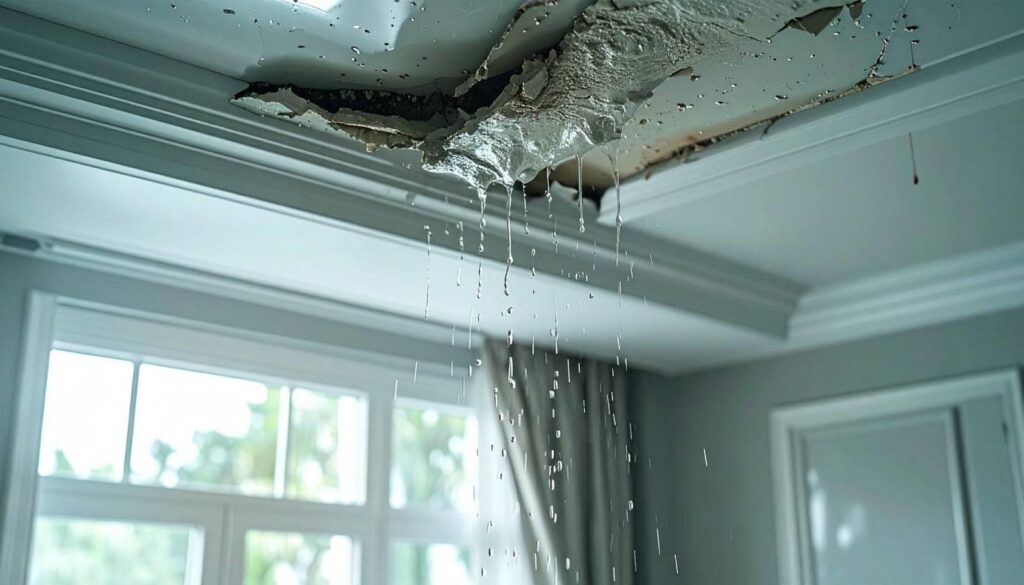
When you spot ceiling water damage, you’re usually looking at more than a stain. A roof leak, failed pipe, or hidden condensation can soak insulation, weaken drywall, and spread mold behind the surface. If you ignore it, you could face structural damage or even electrical risk. The first step in ceiling water damage repair is to find and stop the moisture source, but the real question is how bad the damage has already become.
Key Takeaways
- Ceiling water damage usually comes from roof leaks, plumbing failures, clogged gutters, or condensation in poorly ventilated spaces.
- Common warning signs include stains, bubbling paint, soft drywall, sagging areas, and brown or yellow water rings.
- Unrepaired moisture can weaken drywall, damage insulation, encourage mold growth, and create electrical hazards.
- First, stop the leak, shut off power to affected circuits, and confirm the ceiling is dry before starting repairs.
- Call a water damage professional if the ceiling is sagging, actively dripping, or the leak involves wiring or multiple rooms.
What Causes Ceiling Water Damage?
Ceiling water damage usually starts when water gets past the building envelope or a plumbing system and soaks into the ceiling assembly. You may trace it to failed roof flashing, cracked shingles, clogged gutters, or ice dams that force runoff under roofing layers.
Inside the home, leaking supply lines, drain joints, bath fixtures, or HVAC condensate pans can release moisture above the ceiling. Slow leaks are especially tricky because they can stay hidden for weeks and spread through insulation, framing, and drywall.
Condensation from unvented attics or humid rooms can also add moisture. For effective ceiling water damage repair, you need to stop the source first, then dry the cavity, protect nearby materials, and bring the area back to sound condition.
What Ceiling Water Damage Looks Like
Once moisture gets into the ceiling assembly, you’ll usually see stains, bubbling paint, soft drywall, or sagging spots that indicate the material has started to fail.
You may also notice brown, yellow, or copper-colored rings, which often map the path of a slow leak. If the ceiling texture looks warped, cracked, or blistered, press gently nearby; damaged areas often feel spongy or uneven.
Watch for peeling tape at seams, pinholes, or a subtle bulge that grows after rain or showers. In bright light, you might spot dark patches or a faint tide line where water once pooled.
If you live with others, compare notes, because shared spaces often reveal the pattern faster than one room alone.
Why Ceiling Water Damage Is Serious
Water intrusion in a ceiling is serious because it can compromise the structure, spread hidden mold, and create electrical hazards before the surface damage looks extreme. You’re not just dealing with stains; you’re facing a problem that can worsen fast inside the assembly.
Saturated drywall can lose strength and sag unexpectedly.
Moist insulation traps moisture, feeding microbial growth behind the finish.
Water near wiring can damage fixtures and raise shock risk.
If you live in a home with others, this matters even more, because one hidden leak can affect shared air quality and safety.
You need to treat the issue as active, not cosmetic. The earlier you identify the source, the better you protect your space, your budget, and everyone who depends on that ceiling.
How to Fix Ceiling Water Damage Safely
Before you repair the visible damage, you need to stop the leak, cut power to any affected circuits, and confirm the ceiling is dry enough to work on safely.
Once it’s stable, protect the room with plastic, gloves, goggles, and a respirator if dust or mold is present.
Remove sagging drywall or plaster that’s loose, then scrape away damaged paint and texture.
If insulation is wet, pull it out and replace it after the cavity dries.
Treat stains with a cleaner made for water damage, then patch with joint compound, tape, and sand smooth.
Prime the area with a stain-blocking primer before repainting.
Work in sections, keep the space ventilated, and check for soft spots so you’re rebuilding a solid, shared-safe ceiling.
When to Call a Water Damage Pro
Call a water damage pro if the ceiling is sagging, bulging, or actively dripping, or if the leak has spread into insulation, electrical wiring, or multiple rooms. You’re dealing with a safety issue, not just a stain.
A certified team can meter moisture, isolate the source, and dry hidden cavities before mold starts. Call sooner when you notice:
- soft drywall or cracking seams,
- musty odors or discoloration returning after drying,
- breakers tripping or fixtures flickering.
You belong in a home that feels solid, and pros help restore that faster. They’ll assess structural risk, document losses, and coordinate repairs with your insurer.
If the damage keeps growing, don’t wait for patchwork fixes to fail; get expert help now.
Recap
When you spot ceiling water damage, you’re looking at more than a stain—you’re seeing a sign that something upstream needs attention. Start by stopping the leak, drying the area, and checking for hidden moisture or electrical concerns. If the ceiling sags, the damage spreads, or you suspect mold, don’t wait. Bring in a water damage pro to assess the full picture and handle the heavy lifting before the situation quietly grows into a bigger repair.