
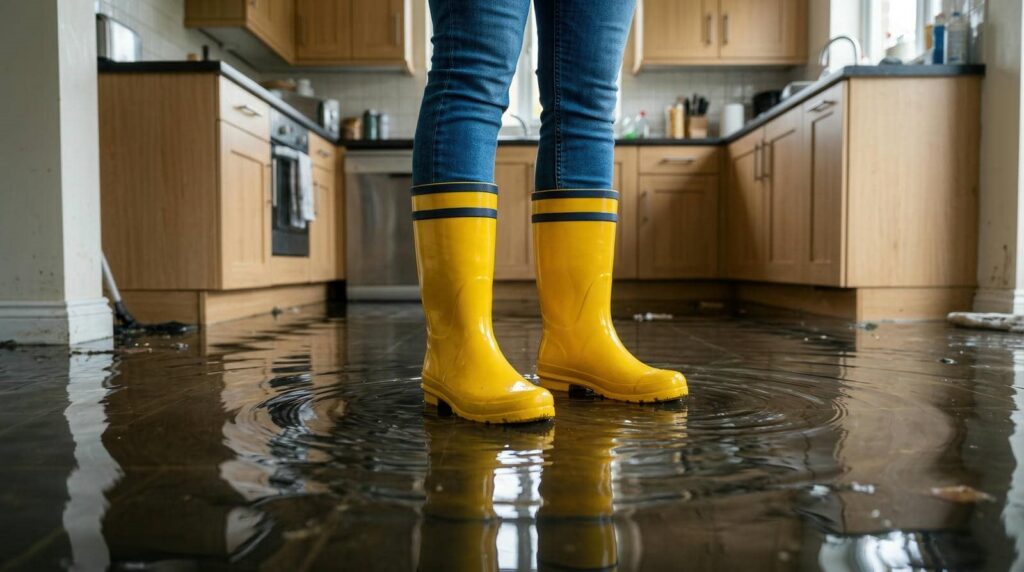
You may not realize that the first minutes after water intrusion can determine how much of your property you save. You need to stop the source, shut off electricity and gas if it’s safe, and move people and pets to dry ground. Then document the damage before you start cleanup. The next steps when dealing with emergency water damage cleanup can limit mold, preserve materials, and make the response more controlled.
Key Takeaways
- Shut off the main water valve and, if safe, turn off electricity and gas to prevent further damage or hazards.
- Evacuate people and pets from affected areas and keep everyone in a dry, safe zone away from standing water.
- Take photos and videos of the damage before cleanup, including wide shots, close-ups, and notes about the water source.
- Remove standing water quickly with a wet/dry vacuum or pump, and ventilate the area by opening doors and windows if safe.
- Move furniture, rugs, electronics, and wet materials to a dry area to reduce mold growth and further damage.
Stop the Water and Turn Off Utilities
The first priority is to stop the water at its source and shut off affected utilities as quickly as possible. If you can safely reach the main valve, close it and verify that supply lines have stopped flowing.
Then turn off electricity to wet areas at the breaker panel, but only if you can do so without standing in water. Shut off gas if you smell a leak or if equipment has been submerged.
This step limits structural damage, reduces shock and fire risks, and supports emergency water damage cleanup. You’re taking the right first action for your team and property when you isolate the source fast.
Document what you shut off, then wait for the restoration crew to assess the site and begin controlled cleanup.
Move People and Pets to Safety
Once you’ve stopped the water and cut immediate utility risks, move everyone out of affected rooms and keep pets away from standing water, wet flooring, and damaged electrical equipment.
Set a clear safe zone in a dry, well-lit area, and keep doors closed to limit traffic into the hazard area. If anyone feels dizzy, has difficulty breathing, or has contact with contaminated water, get medical help right away.
Carry children and small pets if needed, and use leashes or carriers to control movement. Don’t let anyone re-enter until you’ve confirmed the space is stable and safe.
Your team can handle the cleanup more effectively when people stay protected, calm, and together in one controlled area.
Document Water Damage Before Cleanup
Before cleanup begins, document the damage with photos or video from multiple angles so you’ve got a clear record of affected rooms, materials, and equipment.
Capture wide shots, then close-ups of stains, warped flooring, soaked insulation, and any visible debris. Include serial numbers, labels, and utility areas if they’re safely accessible.
Note the date, time, source of water if known, and any steps you’ve already taken. Save files in a dedicated folder and back them up to cloud storage or a second device.
Keep receipts for emergency supplies and temporary repairs. This record helps you stay organized, support insurance claims, and coordinate with your restoration team.
When you document carefully, you’re protecting your home and joining the process with confidence.
Start Water Damage Cleanup Fast
Move quickly to stop the water source, shut off electricity to affected areas if it’s safe, and begin removing standing water right away.
Use a wet/dry vacuum, pump, or mop to lower the water level fast. You’ll reduce saturation in floors, drywall, and trim by acting now.
Open doors and windows if weather and security allow, and run fans to keep air moving.
If you’re working with a team, assign one person to pump, one to clear pathways, and one to monitor hazards.
Wear gloves and boots to limit exposure.
Keep your focus on fast, controlled cleanup so you and your property stay safer. Every minute counts, and quick action helps you take charge before professional help arrives.
Protect Materials From Mold and Further Damage
After the standing water is under control, protect exposed materials right away to limit mold growth and secondary damage.
Move rugs, furniture, boxes, and electronics to a dry, ventilated area if you can do so safely. Lift draperies, remove wet cushions, and separate items so air can circulate around each surface.
If you can’t dry materials within 24 to 48 hours, expect mold to start and treat the area as urgent. Remove damp paper, cardboard, and insulation, since they trap moisture and support contamination.
Cover salvageable furniture with clean, breathable sheets, not plastic, which can hold humidity. Keep HVAC off if it may spread spores.
Document damage, label affected items, and work with your crew to isolate wet zones so your space stays safer and recovery moves faster.
Summary
Act fast to limit loss and restore safety. If you’ve heard that “waiting a little won’t matter,” that theory is usually false—water damage can worsen in minutes, not hours. Shut off the source, cut power and gas if needed, move everyone to safety, document the scene, and start removing water right away. When you dry materials quickly and keep mold from spreading, you reduce repairs, protect health, and give professionals a cleaner, safer job.