
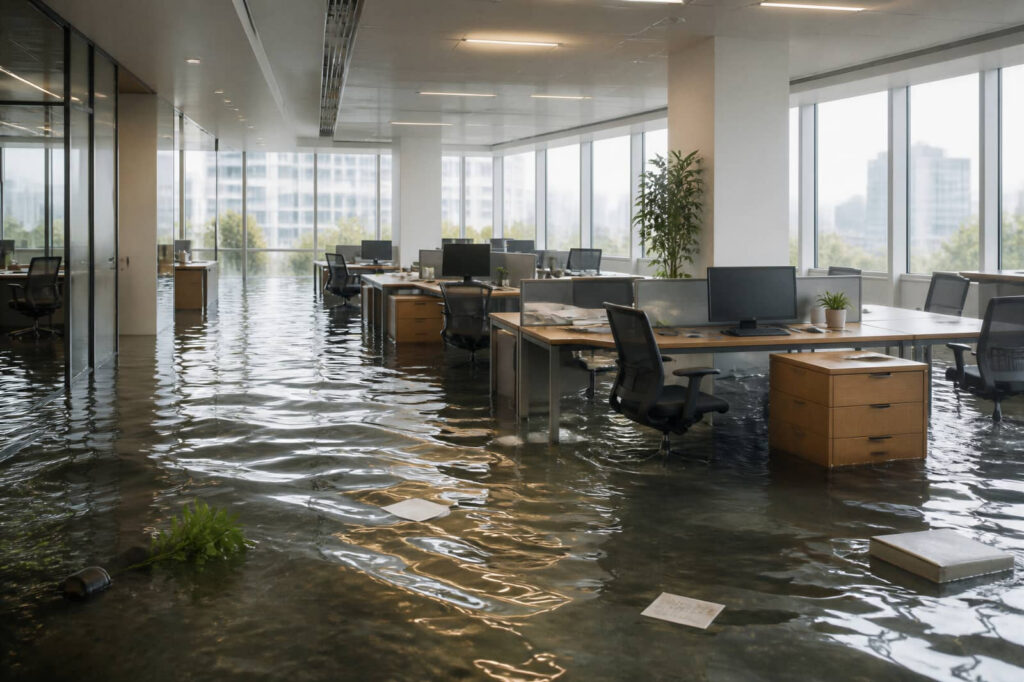
If a sprinkler line bursts over your conference room, you need to act fast to limit loss. You should shut off the source, move desks and files, and unplug electronics before moisture spreads. Lift furniture, remove standing water, and start drying affected areas right away. You’ll also need to inspect equipment and surfaces for hidden damage, because what you don’t catch in the first hour can shape the cleanup that follows. Here is how to handle office water damage while protecting your team, workspaces, and equipment.
Key Takeaways
- Act quickly: shut off the water source, document damage, and restrict access to wet areas.
- Remove portable items, relocate files and electronics, and keep sensitive equipment unplugged and upright.
- Extract standing water with pumps or wet vacs, then use air movers and dehumidifiers to dry the space.
- Clean and disinfect surfaces after drying, using approved detergents and EPA-registered products with proper contact time.
- Repair leaks, inspect drainage, and monitor humidity and odors until the office is fully stable.
First Steps After Office Water Damage
After office water damage, you should act quickly to limit further harm to desks, flooring, walls, documents, electronics, and tenant spaces.
Begin office water damage cleanup by documenting affected areas with photos and notes, so you can track loss and support claims.
Remove portable items from wet surfaces, then separate dry materials from saturated ones to prevent cross-contamination.
Inspect visible moisture on baseboards, carpet edges, and furniture joints, and report structural concerns to your facilities team.
Relocate critical files, devices, and supplies to a dry room with stable airflow.
Keep staff informed with clear instructions, because coordinated action reduces confusion and supports recovery.
Use labeled bins and clear pathways to organize items efficiently and protect shared workspaces during the first response.
Stop the Water and Secure the Area
Once you’ve documented the damage and moved vulnerable items, shut off the water source as soon as you can to stop further intrusion into desks, flooring, walls, documents, electronics, and tenant spaces.
If you can’t isolate the valve safely, contact building maintenance, facilities staff, or the property manager immediately and confirm the shutdown in writing when possible. Office water damage can affect several departments at once, so a coordinated response matters.
Next, secure the area by posting temporary warnings, restricting access, and closing affected corridors or rooms.
You should also identify slip hazards, expose the wet perimeter, and keep foot traffic out until the surface is stable.
In a shared office, clear communication helps everyone stay aligned and reduces confusion.
When you protect the space quickly and methodically, you support a safer recovery and help your team regain control faster.
Protect Desks, Documents, and Electronics
Move desks, files, and electronics out of the wet zone as soon as it’s safe, starting with items closest to the leak and anything resting on the floor.
You should lift furniture onto blocks or clean pallets so legs don’t stay saturated. Unplug computers, monitors, printers, and chargers before you handle them, then label each cord so reassembly stays orderly. Securing the area first keeps office water damage from creating safety hazards for staff.
Move paper records into a dry, ventilated area, and separate wet pages with clean sheets to reduce transfer. Keep sensitive devices upright, and don’t power them on until a qualified technician inspects them.
If your team works together and follows the same sequence, you’ll protect shared assets, preserve data, and keep the office’s recovery moving with confidence and control.
Remove Standing Water From the Office
Start extracting standing water as soon as the area is safe and the source has been stopped. Use a submersible pump for deeper pooling, then switch to wet vacuums for low spots and edges.
Work from the perimeter toward the main collection point so you don’t spread contamination or track water into adjacent zones. Place intake hoses where flow is highest, and empty recovery tanks before they reach capacity.
If water contains debris, use strainers to protect equipment and keep suction steady. Mark wet areas, restrict traffic, and coordinate with your response team so everyone stays aligned.
Quick removal limits slip hazards, reduces saturation of finishes, and helps your office return to normal with less disruption. Keep records of extraction volumes for your incident log. Electronics are among the most vulnerable assets during office water damage.
Dry Floors, Walls, and Tenant Spaces
With standing water removed, you should dry floors, walls, and tenant spaces immediately to limit secondary damage and microbial growth.
Position high-velocity air movers to drive evaporation across carpet, tile, baseboards, and wall cavities. Run dehumidifiers to pull moisture from the air and keep relative humidity in the safe range.
Lift wet rugs, remove saturated padding, and expose hidden surfaces so airflow reaches them. Open accessible wall sections only as needed to accelerate drying and verify moisture reduction.
Monitor conditions with a moisture meter and record readings until materials return to baseline.
In shared offices, coordinate each suite’s drying plan so everyone can stay aligned, reduce downtime, and protect nearby work areas from lingering dampness and odor.
Clean and Disinfect Office Surfaces
You should clean office surfaces with methods matched to the material, using approved detergents and microfiber cloths to remove residues without spreading contamination. Fast extraction limits how deep office water damage can soak into carpet and subfloors.
After cleaning, you’ll disinfect and sanitize high-touch areas, desks, and shared equipment with an EPA-registered product that meets the required dwell time.
This step helps reduce microbial risk and restores a safe working environment after water damage.
Surface Cleaning Methods
A thorough surface cleaning process removes visible contamination and helps prevent microbial growth on desks, flooring, walls, and other office touchpoints after water damage.
You should start by removing loose debris with HEPA vacuuming or dry wiping, then wash hard surfaces with a neutral detergent and clean microfiber cloths.
Work from the least soiled areas toward the most affected zones to avoid spreading residue. For porous materials that still have structural integrity, use minimal moisture and gentle agitation to lift soil without saturating the substrate.
Change cloths and cleaning solution often, and keep tools dedicated to each area. Shared spaces and tenant suites need careful drying after office water damage.
If you’re coordinating with your team, label cleaned sections clearly so everyone knows what’s been addressed and where follow-up inspection is needed.
Disinfection And Sanitization
After surface cleaning removes visible soil, disinfect high-touch office surfaces to reduce the risk of microbial spread and lingering contamination.
You should select an EPA-registered product compatible with desks, switches, phones, and shared equipment, then follow label dwell times exactly. Apply disinfectant evenly, keep surfaces visibly wet for the required contact period, and ventilate the space to support safe drying.
Focus on the areas your team touches most, because that’s where trust and continuity matter.
- Door handles and light switches
- Keyboard and mouse stations
- Conference tables and chair arms
- Copier controls and breakroom counters
This step helps you restore a healthy workplace faster, protect occupant confidence, and reinforce a shared sense of safety after water damage.
Inspect Electrical Equipment for Damage
Before restoring power, inspect all office electrical equipment for visible water exposure, corrosion, frayed cords, and damaged outlets. Thorough cleaning removes contaminants that office water damage can leave behind.
You should treat every device as compromised until you verify it’s dry, intact, and safe to energize. Check surge protectors, power strips, printers, computers, monitors, phones, and copiers for warped housings, odor, or residue.
If you spot any moisture inside a unit, keep it out of service and tag it for qualified evaluation. Don’t plug damaged equipment into live circuits, and don’t bypass grounding or safety features.
Document each asset’s condition so your team can coordinate repairs, replacement, and reinstallation efficiently.
When you follow a disciplined inspection process, you protect your workspace, reduce downtime, and help your office recover together with confidence.
Prevent Mold and Future Water Intrusion
To prevent mold and limit repeat water intrusion, you need to dry affected areas quickly, remove porous materials that stayed wet too long, and maintain strong airflow until moisture readings return to normal.
You should then verify hidden cavities, seal gaps, and document every wet zone so your team stays aligned and confident.
Inspect baseboards, wall voids, and ceiling plenum spaces for trapped moisture.
Disinfect hard surfaces with an approved antimicrobial product after drying.
Repair failed seals, flashing, plumbing, and drainage paths before reopening.
Recheck humidity, leaks, and odors for several days to catch relapse early.
When you act fast and work together, you protect your workspace, reduce health risks, and keep equipment and tenant areas ready for normal use.
Frequently Asked Questions
How Do I Document Damage for Insurance Claims?
You’ll document damage by photographing every affected area, item, and serial number, then listing dates, causes, and estimated losses. Keep receipts, moisture readings, and repair quotes organized so your insurer can verify claims quickly and fairly.
When Should Employees Return to the Office After Cleanup?
You should return only after you’ve verified drying, sanitation, and air-quality clearance, and facilities or remediation staff confirm safety. You’ll protect your team by waiting until hazards, odors, and electrical risks are fully resolved.
Who Should Be Notified About Tenant Water Damage?
You should notify your landlord, property manager, and insurer immediately; for example, if a ceiling leak soaks tenant desks, you’ll also alert building maintenance and your facilities team so they can coordinate containment, documentation, and repairs.
Can Office Water Damage Affect HVAC Systems?
Yes, it can. You can see corrosion, electrical faults, mold growth, and reduced airflow in ducts, motors, and controls. You should inspect quickly, isolate affected zones, and restore HVAC performance to protect your workspace and tenants.
How Long Does Professional Restoration Usually Take?
Usually, you’ll need 1-7 days, depending on damage, drying, and repairs. You’ll see technicians assess moisture, map affected zones, and monitor progress, so you can feel confident your workspace’s recovery stays controlled and efficient.
Final Thoughts on Office Water Damage
By acting fast after office water damage, you protect your workspace, equipment, and operations. Remove wet materials, dry affected areas, and inspect electronics before reusing them. Remember, mold can begin growing within 24 to 48 hours, so speed matters. If you document damage and control moisture early, you’ll reduce repair costs and downtime. Careful cleanup now helps you return to a safer, more productive office with less long-term risk. A quick, organized response keeps office water damage from becoming a long-term disruption.