Many businesses never reopen after a major water loss, so you can’t afford to treat mitigation as a slow cleanup. When you stop the spread fast, protect HVAC, electrical, and IT systems, and bring in the right team, you reduce shutdown time and limit secondary damage. The key is what you do in the first hour, because that’s where recovery either starts—or slips away.
Key Takeaways
- Stop the water source quickly and contain spread with barriers, sandbags, and plastic sheeting.
- Remove standing water immediately using pumps, wet vacs, and mops to limit further damage.
- Protect electrical panels, HVAC, servers, and inventory by isolating power and covering critical assets.
- Dry affected areas fast with air movers, dehumidifiers, and opened wall cavities to prevent mold.
- Document damage, moisture readings, and repairs while setting temporary workflows to keep operations running.
What Is Commercial Property Water Mitigation?
Commercial property water mitigation is the process of controlling and removing water intrusion in a commercial building to limit damage and prevent further spread of moisture.
In commercial property water mitigation, you assess affected areas, document conditions, and stabilize materials so your space stays safe and workable. You’re not just drying surfaces; you’re protecting electrical systems, walls, flooring, and inventory from hidden damage.
The goal is to restore normal operations with minimal disruption, so your team can keep moving forward together. When you act quickly and use trained professionals, you reduce the chance of structural weakening, mold growth, and costly downtime.
This practical approach gives you a clear path from disruption back to control, helping your business feel prepared, connected, and supported.
Stop Water Spread in the First Hour
In the first hour, you need to stop the water from traveling into adjacent rooms, wall cavities, and service areas. Move fast and work methodically: identify the source, shut off flow if you can do so safely, and block migration with sandbags, weighted barriers, or plastic sheeting at thresholds.
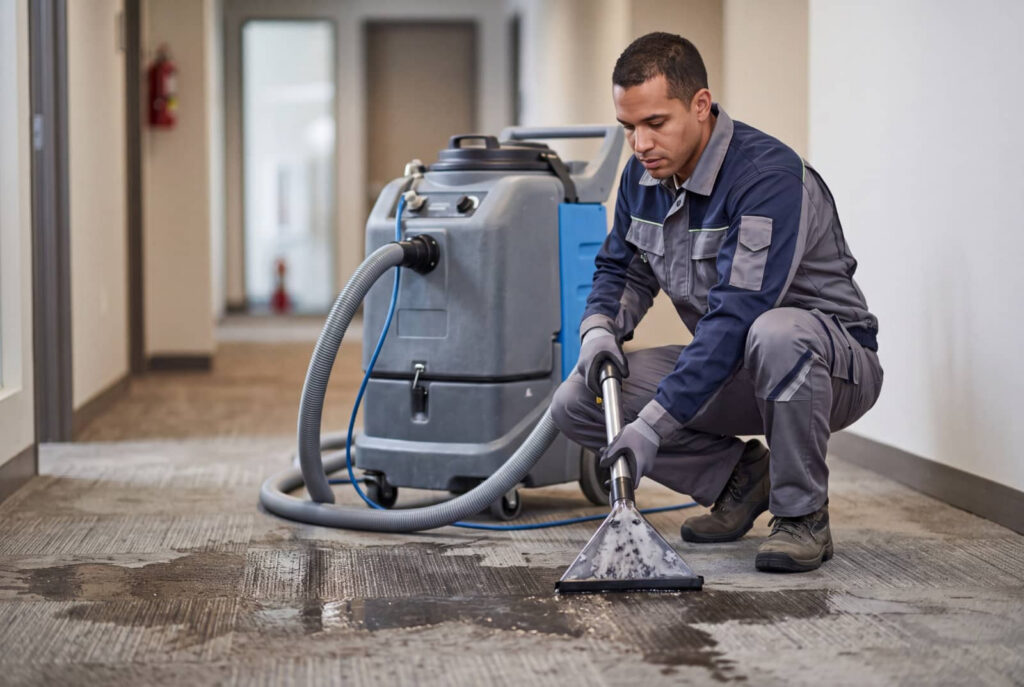
Pull movable items away from wet zones so they don’t wick moisture or obstruct access. Remove standing water with pumps, wet vacs, or mops, then open the affected area for airflow by propping doors and using fans.
Check baseboards, carpet edges, and low spots where water hides. If you’re coordinating a team, assign one person to contain, one to document, and one to clear pathways. Your crew can keep the site stable and your business moving.
Protect HVAC, Electrical, and IT Systems
You should shield HVAC units, electrical panels, and other critical equipment as soon as water reaches the area.
Isolate energized circuits and lock out affected systems to reduce shock risk and prevent further damage.
You also need to secure servers, network gear, and backups so your IT infrastructure stays protected and recovery can begin faster.
Shield Critical Equipment
When water reaches a property, your first priority is to shield HVAC units, electrical panels, and IT equipment before damage spreads. Move portable covers, tarps, or plastic sheeting in place to deflect dripping and splashback, and elevate smaller devices onto dry racks or pallets.
You’ll want to keep service paths clear so your team can inspect equipment quickly and document conditions. If rooftop units, server closets, or control cabinets are in the affected zone, seal openings with temporary barriers and use fans to help keep humidity down around them.
Label each protected asset and track its status so everyone stays aligned. Acting fast here helps your crew protect the systems your business depends on, so you can recover with confidence and stay connected as a team.
Isolate Electrical Hazards
After you’ve shielded the equipment, cut the risk at the source by isolating any electrical hazard areas before crews work nearby. You should de-energize affected circuits, lock out panels, and verify zero voltage before anyone enters wet zones.
If shutoff isn’t possible, set clear barriers, post warning signs, and keep only qualified personnel in controlled areas. Protect HVAC controls, switchgear, and junction boxes from splash, standing water, and conductive debris.
Use dry access paths and insulated tools, and inspect cords for damage before reuse. You’ll help your team move faster when everyone knows which spaces are safe, which stay off-limits, and who’s responsible for clearance.
That shared discipline reduces shock risk, limits secondary damage, and keeps recovery work moving without avoidable delays.
Secure IT Infrastructure
Once the electrical hazards are controlled, secure your IT and building-control infrastructure so moisture doesn’t spread into HVAC panels, server racks, network closets, or automated controls.
You should power down vulnerable devices, then seal cabinets, patch conduit openings, and elevate critical hardware above wet floors.
Use plastic sheeting or temporary barriers to create clean, dry zones around network gear and control panels.
If you can’t relocate equipment, keep airflow moving with dehumidifiers and professional drying.
Document every cable, device, and panel before touching it, so your team can restore systems quickly and confidently.
When you protect these shared systems together, you help your facility stay connected, your occupants stay informed, and your recovery stay on track.
Choose the Right Water Mitigation Partner
Choosing the right water mitigation partner starts with verifying that the team can act quickly to stop moisture spread, protect critical building systems, and limit business interruption.
You want certified technicians, 24/7 dispatch, and clear protocols for assessment, containment, and documentation.
Ask how they coordinate with your facilities team, insurers, and vendors so your response stays aligned.
A dependable partner uses calibrated meters, thermal imaging, and containment planning to track risk without wasting time.
You should also confirm they understand commercial schedules, security requirements, and tenant communication.
When you choose a team that speaks plainly, responds fast, and works like part of your operation, you gain confidence and keep your property community moving together.
Dry Out Walls, Floors, and Contents
How do you dry a commercial space without trapping hidden moisture? You start fast, open wall cavities, and remove wet baseboards or insulation that can hold water.
Set air movers to sweep across floors and lower wall surfaces, then place dehumidifiers to pull vapor from the air before it settles back into materials.
You should lift carpeting, separate stacks of paper, and spread contents so airflow reaches every side.
Check framing, drywall, and subfloors with moisture meters until readings match safe dry standards.
Keep doors, HVAC zones, and work areas controlled so drying stays efficient.
When you work this way, you protect your team’s space, reduce secondary damage, and get everyone back to normal sooner, with less disruption and more confidence.
Document the Damage for Insurance
Document the damage right away so you can support the claim and speed up recovery. Take clear photos and short videos of affected areas, equipment, and building materials before anyone moves items.
Record dates, times, water source, and visible conditions in a simple log your team can share. Keep copies of emergency invoices, extraction reports, and moisture readings together for the adjuster.
Photograph each room from wide and close angles.
Note serial numbers, inventory, and affected assets.
Save emails, work orders, and vendor notes.
Back up files in cloud storage and a folder.
This documentation gives your crew and insurer a shared, factual record. When you stay organized, you’ll feel more in control, and your claim can move forward with fewer questions.
Minimize Downtime and Revenue Loss
To minimize downtime, act fast to isolate the affected area, protect essential systems, and keep core operations running wherever you can.
Shut off impacted utilities, reroute staff, and move customers to unaffected zones so your team can stay productive.
Prioritize servers, electrical panels, HVAC controls, and stock that keep revenue flowing.
Bring in mitigation crews quickly, so they can extract water, stabilize conditions, and reduce the interruption window.
Communicate clear updates to employees, tenants, and vendors so everyone knows the plan and can adjust without confusion.
Set temporary workflows, remote access, or backup equipment if your operation supports them.
When you coordinate decisively, you protect cash flow, preserve trust, and help your property get back online with less disruption.
Prevent Mold During the Drying Process
As drying begins, keep mold from taking hold by removing wet materials quickly, lowering indoor humidity, and maintaining steady airflow across affected areas. You’ll protect finishes, inventory, and occupied spaces when you act fast and monitor conditions closely.
Use dehumidifiers to pull moisture from the air, and check hidden cavities, wall bases, and carpet backing for lingering dampness.
- Remove saturated porous items.
- Isolate affected zones.
- Verify moisture readings daily.
- Disinfect hard surfaces after drying.
When you stay disciplined, you help your team keep the building healthy and business-ready. Record progress, adjust equipment placement, and continue until materials reach acceptable dry levels.
That steady approach reduces odor, limits contamination, and keeps everyone confident in the recovery process.
Build a Water Mitigation Response Plan
When a water event hits, you need a clear response plan that tells your team who does what, when to shut off affected systems, and how to protect tenants, equipment, and records.
Assign roles for security, maintenance, risk management, and restoration so everyone acts fast. Map shutoff valves, electrical panels, and drain paths, and keep that map accessible to your crew.
Set trigger points for calling emergency services, documenting damage, and starting extraction. Use checklists for site access, moisture mapping, and equipment relocation.
Keep contact lists current for vendors, insurers, and key occupants. Train your team with drills, because practiced crews respond with confidence and stay coordinated.
A solid plan helps you limit moisture spread, reduce business interruption, and keep everyone moving together.
Frequently Asked Questions
How Quickly Should Mitigation Crews Arrive After a Water Loss?
You should aim for mitigation crews to arrive within 1 to 2 hours after a water loss, because you’ll limit moisture spread, protect systems, and reduce downtime. Faster response usually means less damage, less interruption.
What Permits Are Needed for Commercial Water Mitigation Work?
Usually, you’ll need no permit for drying, but you may need plumbing, electrical, demolition, or mold-related permits. For example, if you remove a ceiling after a burst pipe, you’d verify local code first.
Can Tenants Stay in the Building During Mitigation?
Yes, you can often stay in the building if you isolate the work area, control moisture, and maintain safe access. You’ll need clear communication, temporary barriers, and ventilation so you’re protected and operations continue.
How Is Contaminated Water Classified and Handled Safely?
You’ll treat contaminated water as Category 2 or 3, depending on source and exposure. You isolate it, wear PPE, extract it, disinfect affected areas, and dispose of waste safely so your team stays protected.
What Equipment Speeds Drying in Large Commercial Spaces?
You’ll dry large commercial spaces faster with high-velocity air movers, LGR dehumidifiers, desiccant units, and HEPA-filtered negative-air machines. You can place them strategically to boost airflow, remove moisture, and protect occupants and systems.
Wrap-Up
When water hits your property, every minute matters, but a clear plan turns chaos into control. You can stop the spread, protect critical systems, and start drying fast, even as you document damage and protect your claim. The contrast is simple: faster action means less downtime, less loss, and less mold. With the right mitigation partner and response plan, you’re not just recovering—you’re keeping your business moving.