
Key Takeaways
- Make sure everyone is safe, avoid standing water, and evacuate if you smell gas, hear hissing, or see sagging ceilings.
- Shut off the main water supply and, if safe, turn off power at the breaker to reduce flooding and electrical shock risk.
- Take photos and videos of all visible damage before moving anything for insurance and repair documentation.
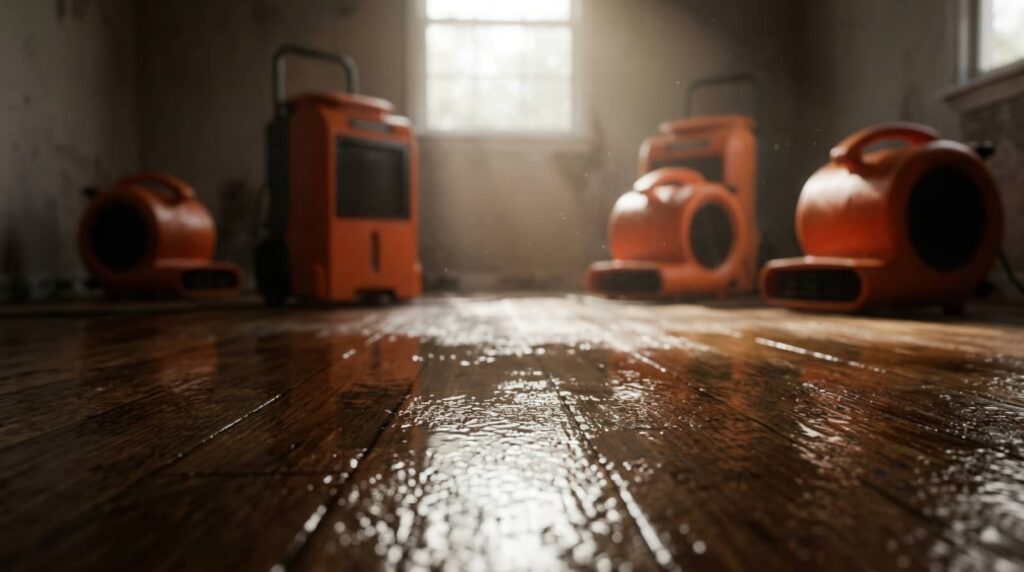
- Dry the area with fans and dehumidifiers only after confirming it is safe, and keep unaffected rooms closed off.
- Call a water damage professional quickly if the leak is hidden, widespread, or involves drywall, insulation, or structural damage.
Check for Immediate Hazards
Before you do anything else, check for immediate hazards so you can stay safe during the emergency. Look for slippery floors, unstable ceilings, broken glass, and fast-moving water before you step farther inside.
If you can reach them safely, stop the water source and keep everyone away from affected areas. Wear shoes with good traction and avoid rushing, because clear movement helps you protect yourself and others.
If the damage looks severe, back out and call trained help right away. As you decide what to do during a water damage emergency, document visible damage with photos from a safe distance so you can support your next steps.
You’re not dealing with this alone; careful assessment helps your household stay organized, calm, and ready for recovery.
How to Handle Electrical Hazards
If water has reached outlets, appliances, or wiring, you should shut off power at the main breaker if you can do so safely.
Avoid standing water near any electrical source, since it can conduct current and increase shock risk.
If you’re unsure about any component or see visible damage, call a licensed electrician right away.
Shut Off Power
Cut the power at the main breaker as soon as you can safely reach it, since standing water can energize outlets, appliances, and metal surfaces.
If the panel is in a dry area, switch off each affected circuit, then turn off the main. Use a flashlight, not candles, so you don’t add fire risk.
If you must cross wet flooring to reach the breaker, stop and call a licensed electrician or your utility company.
Keep everyone together and away from outlets, cords, and plugged-in equipment.
After the power is off, leave switches in the off position until a professional clears the space.
This simple step protects you, your family, and your home while you wait for help and begin the recovery process.
Avoid Standing Water
Once the power is off, keep clear of any standing water because it can still hide electrical hazards. You should treat every puddle, soaked carpet, and damp floor as unsafe until you know the area is dry and de-energized.
Wear nonconductive shoes if you must move nearby, and avoid touching outlets, cords, or appliances with wet hands. Don’t wade through water to retrieve belongings; your safety comes first, and your home can wait.
Use a flashlight instead of electrical lighting if the room feels dark. If water is spreading, guide family members and pets to a dry area so everyone stays together and protected.
Call An Electrician
After you’ve kept clear of standing water, call a licensed electrician to inspect the area before you restore power or touch any affected circuits.
You can’t assume wiring is safe just because outlets look dry. Water may have reached junction boxes, breakers, appliances, or hidden cable runs, creating shock and fire risks.
Keep everyone out of the affected zone, switch off power only if you can do so from a dry, accessible panel, and don’t reset breakers until the electrician gives the all-clear.
If you smell burning, hear buzzing, or see sparks, leave immediately and report it.
Your household, crew, or neighbors deserve a safe restart, so let a professional test grounding, insulation, and equipment before anyone returns to normal use.
Stop the Water at Its Source
You should shut off the main water valve first to stop the primary flow and limit further damage.
Then isolate the affected plumbing line so water doesn’t continue feeding the leak.
If an appliance is involved, turn off its dedicated water supply right away.
Shut Off Main Valve
Quickly shut off the main water valve to stop the flow at its source and limit further damage. You’ll usually find it near the meter, in a basement, utility closet, or outside wall.
Turn the handle clockwise until it stops, or use a quarter-turn motion if it’s a lever. Stay calm and work methodically; you’re taking the right first step with your team.
- Confirm the water stops running at faucets.
- Note the valve location for fast access later.
- If the valve won’t move, don’t force it; wait for professional help.
After the valve is closed, you’ve reduced pressure on the system and can focus on the next response steps with confidence and control.
Isolate Affected Plumbing
Next, isolate the affected plumbing so the water stays off at the source. If you can safely reach the nearest fixture or branch shutoff, close it to stop flow to the damaged line.
Turn the valve clockwise until it stops, but don’t force it. If the plumbing serves only one room, isolating it lets the rest of your home keep working while you stabilize the emergency.
Watch for dripping at joints, supply lines, and fixtures after you close the valve. If the leak continues, the shutoff may not be holding, and you’ll need professional help.
Stay calm, keep others clear of the area, and let your household know which water lines are disabled so everyone can work together safely.
Stop Appliance Water Supply
If the water is coming from an appliance, shut off its dedicated supply valve or unplug it if it’s safe to do so. This immediately reduces flow and protects your home team from further damage.
Stay calm, move carefully, and avoid standing in pooled water near outlets or cords.
- Turn off the washer, dishwasher, refrigerator line, or water heater source at the valve.
- Check for drips, hose cracks, or loose fittings, and don’t force damaged parts.
- If you can’t stop the leak quickly, call a qualified technician and your water damage response team.
Get Everyone to Safety
First, make sure everyone is safe and move people away from standing water, wet floors, and any area where ceilings, walls, or electrical systems may be compromised.
Keep children, pets, and anyone with mobility limits in a dry, secure room if you can do so without crossing wet surfaces.
Turn off lights, avoid using switches near moisture, and don’t touch anything that could be energized.
If you smell gas, hear hissing, or see sagging surfaces, leave the area and call emergency services.
Stay calm and give clear directions so your household can act together.
You’re protecting your team, and that shared focus helps everyone respond faster and with less stress while you wait for professional help.
Document Water Damage Before Cleanup
Before you start cleanup, document the damage thoroughly so you have a clear record for insurance and repair professionals. You’re building evidence that protects your claim and helps the restoration team understand the scope fast. Move carefully and capture each affected area before anything changes.
- Take wide photos of every room, then close-ups of soaked walls, floors, furniture, and visible stains.
- Record short videos while narrating the date, location, and what you see.
- Write down damaged items, model numbers, and any early actions you’ve taken.
Keep your notes organized in one folder or cloud file. If you’re working with others, share the same records so everyone stays aligned.
This simple step gives you confidence and keeps the response coordinated.
Dry Out the Area the Right Way
Once you’ve documented the damage and confirmed the area is safe, start drying it out with controlled airflow and moisture removal.
Open windows only if outdoor air is drier than indoor air, and use fans to move air across wet surfaces, not straight into pooled water. Remove standing water with mops, towels, or a wet vacuum if you have one.
Pull up rugs, lift cushions, and separate damp items so air can reach every side. Run a dehumidifier in the affected space to reduce humidity and help materials dry faster.
Keep doors open between connected rooms for circulation, but close off unaffected areas to contain moisture. Check walls, floors, and baseboards often, and keep working until surfaces feel dry and stable.
You’ve got this—steady, methodical drying makes a real difference.
When to Call Water Damage Professionals
Call a water damage professional if the leak is widespread, the source is hidden, or the affected materials include drywall, insulation, subflooring, or electrical systems. You’ll get faster assessment, safer drying, and a clearer path back to normal.
A trained team can measure moisture, identify concealed damage, and protect your home from longer-term issues.
- They can locate moisture behind walls and under flooring.
- They can judge whether materials need controlled removal.
- They can document conditions for insurance and next steps.
If you smell mustiness, see swelling, or notice power concerns, reach out right away. You’re not handling this alone; you’re taking the right next step with people who know this work and support your recovery.
What Not to Do Before Cleanup Starts
Resist the urge to start tearing out wet materials, running fans blindly, or turning on electrical equipment until you know the area is safe.
Don’t enter standing water if power may still be live, and don’t touch outlets, cords, or appliances until electricity is confirmed off.
Avoid using household vacuums on saturated flooring or hidden moisture; they can spread contamination and damage motors.
Don’t lift carpet, remove baseboards, or open walls before you’ve documented conditions and checked for structural risk.
Skip bleach or other cleaners on porous materials unless a pro directs you.
Don’t delay calling your restoration team, because fast guidance helps your space recover the right way.
You’re not handling this alone; smart restraint protects your home and your crew.
Frequently Asked Questions
Can I Use a Shop Vacuum on Standing Water?
You can use a shop vacuum on shallow standing water if it’s rated for wet pickup; otherwise, don’t. First, cut power, stop the source, document damage, and call a restoration professional promptly.
Should I Move Furniture Before Taking Photos?
Yes, you should move furniture only if it’s safe and won’t worsen damage. First, photograph everything in place. Then, carefully relocate items, document hidden areas, and call help so you’re protected and supported.
How Long Can Wet Drywall Stay Before Replacement?
Wet drywall can’t usually stay wet beyond 24–48 hours before you should replace it. You’ll need to dry it fast, inspect for swelling or mold, and call a remediation pro if it stayed soaked.
Is Tap Water Safer Than Floodwater to Handle?
No—tap water is usually safer, but neither’s harmless. You should treat both like hidden snakes: avoid contact, cut power, stop the source, document damage, and call professionals before cleanup starts.
Can I Stay Home if Only One Room Is Wet?
You can stay home only if you’ve confirmed the water source is stopped, the affected room’s dry, and there’s no electrical or structural risk. Otherwise, leave, document damage, and call a professional promptly.
Recap
Before cleanup begins, you’ve already taken the most important steps: checked for hidden hazards, kept clear of electrical risks, shut off the water, and moved everyone to safety. With careful documentation and a measured approach, you’ve given yourself the best chance to limit further trouble. If the situation looks beyond a simple fix, don’t hesitate to bring in qualified help. A calm, well-planned response now can make the recovery process far more manageable.