Commercial mold remediation is essential when mold is discovered in a business or commercial property because the problem often extends far beyond what’s visible on the surface. The process begins by identifying and eliminating the moisture source, containing the affected area to prevent the spread of spores, and removing materials that cannot be safely restored. Delaying remediation can lead to poor indoor air quality, structural damage, and potential health concerns for employees and visitors. Taking swift action with a professional remediation plan helps stop the damage early, protect your property, and keep your business operations stable.
Key Takeaways
- Commercial mold remediation starts with finding and fixing the moisture source to prevent mold from returning.
- Professionals isolate affected areas with containment barriers to limit airborne spore spread during cleanup.
- Non-restorable porous materials are removed, while hard surfaces are HEPA-vacuumed and treated with approved antimicrobial methods.
- Fast remediation reduces employee exposure, protects indoor air quality, and helps maintain safe workplace operations.
- Ongoing prevention includes humidity control, ventilation, dehumidifiers, and regular inspections for leaks or hidden condensation.
What Mold Remediation Fixes First
Mold remediation first fixes the moisture source that let mold grow, such as active leaks, excess humidity, or water intrusion.
In commercial mold remediation, you address that source before you remove contaminated materials, because mold can return if moisture remains.
You’ll also isolate affected areas, control airborne spread, and remove porous items that can’t be cleaned effectively.
Then you clean hard surfaces with approved methods and verify that humidity and building materials are back within safe limits.
This process protects your staff, your customers, and your facility’s structure.
When you act early, you reduce downtime and help your team stay confident in the space they share.
That’s the core of a durable remediation plan.
Signs Your Building Needs Mold Remediation
When should you suspect a building needs mold remediation? You should act when you notice recurring moisture, visible growth, or persistent indoor air issues. In commercial spaces, these signs often point to hidden contamination that can affect your team’s comfort and safety.
- Musty odors that linger after cleaning
- Dark spotting on walls, ceilings, or around vents
- Allergy-like symptoms that worsen indoors
- Water stains, bubbling paint, or warped materials
If you see one or more of these indicators, your building may already support mold growth from leaks or high humidity.
You don’t have to guess; a prompt inspection helps you protect your workplace community and maintain a healthier environment.
How Commercial Mold Remediation Works
Commercial mold remediation starts with a professional inspection to find the moisture source, map the affected areas, and determine the extent of contamination.
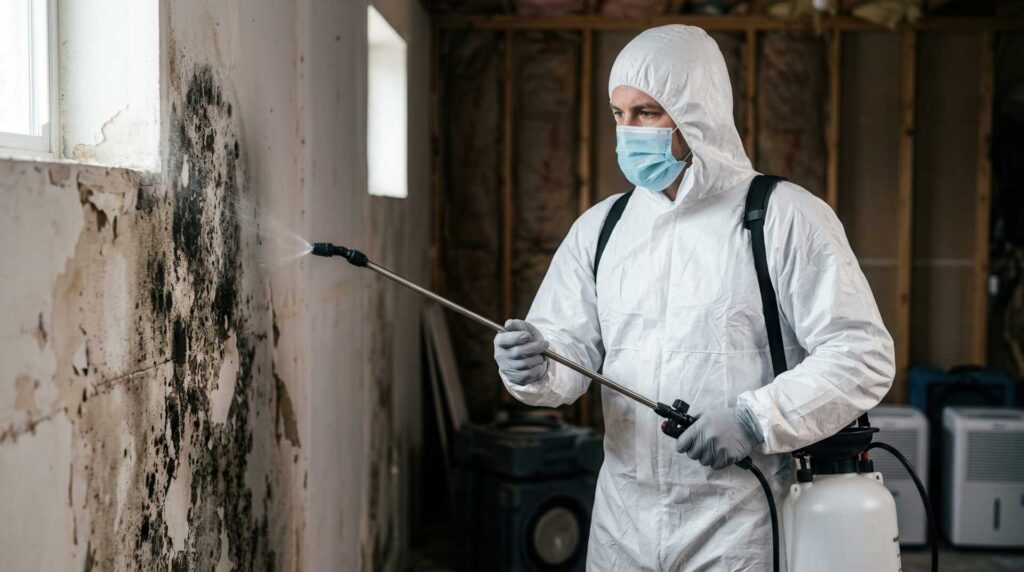
You’ll see technicians isolate work zones with containment barriers and negative air pressure to keep spores from migrating through your building. They remove porous materials that can’t be restored, then clean salvageable surfaces with HEPA vacuuming, detergent washing, and approved antimicrobial treatments.
Moisture control follows, so you can address leaks, condensation, or ventilation failures that allowed growth to develop. After drying and verification testing, the team clears the area for normal use.
This process helps you keep your office, retail space, or facility compliant, orderly, and ready for the people who rely on it every day.
Why Fast Removal Protects Your Staff
Fast removal reduces staff exposure to airborne spores, mycotoxins, and damp-building conditions that can irritate the eyes, skin, sinuses, and lungs.
When you act quickly, you limit the time mold can spread through HVAC systems, porous materials, and shared work areas. That protects your team’s health and helps you keep operations steady.
You also show employees that their safety matters, which builds trust and belonging.
- Fewer respiratory triggers during the workday
- Lower risk of skin and eye irritation
- Less disruption to desks, stock, and meetings
- Faster return to normal staffing levels
How to Prevent Mold After Repairs
After repairs, you can prevent mold by controlling moisture at the source and keeping indoor humidity between 30% and 60%.
Verify that roofs, windows, plumbing, and HVAC condensate lines stay sealed and dry. Use exhaust fans in restrooms, break areas, and wash stations to move damp air out fast.
Install dehumidifiers where humidity runs high, and monitor levels with calibrated sensors. Dry any spill or intrusion within 24 to 48 hours, because mold can colonize fast on porous materials.
Inspect repaired areas weekly for staining, musty odor, or hidden condensation. Replace damaged insulation, ceiling tile, and carpet backing that can retain water.
When you keep surfaces dry and systems balanced, you protect your team and reinforce a healthier workplace together.
How to Choose a Mold Remediation Team
When you choose a mold remediation team, verify that the contractor has experience with commercial buildings, moisture-source diagnosis, containment, and safe removal of contaminated materials.
You need a crew that documents findings, follows industry standards, and communicates clearly with your facility staff, so you can stay confident and informed.
- Check licensing, insurance, and training.
- Confirm they use containment, HEPA filtration, and negative air pressure.
- Ask for written scopes, timelines, and post-remediation verification.
- Compare references from offices, retail spaces, or other facilities like yours.
Choose a team that explains the cause, not just the visible growth.
When you work with specialists who respect your space, you protect occupants, limit disruption, and support a healthier business environment.
Recap
When you address mold quickly, you fix the moisture source, contain contamination, and restore safer air quality before damage spreads. Isn’t it better to walk into a workplace where clean surfaces, stable operations, and protected staff support productivity every day? By choosing a qualified commercial mold remediation team, you reduce health risks, prevent recurrence, and keep your building compliant and functional. Act early, maintain repairs, and you’ll protect both your people and your property.