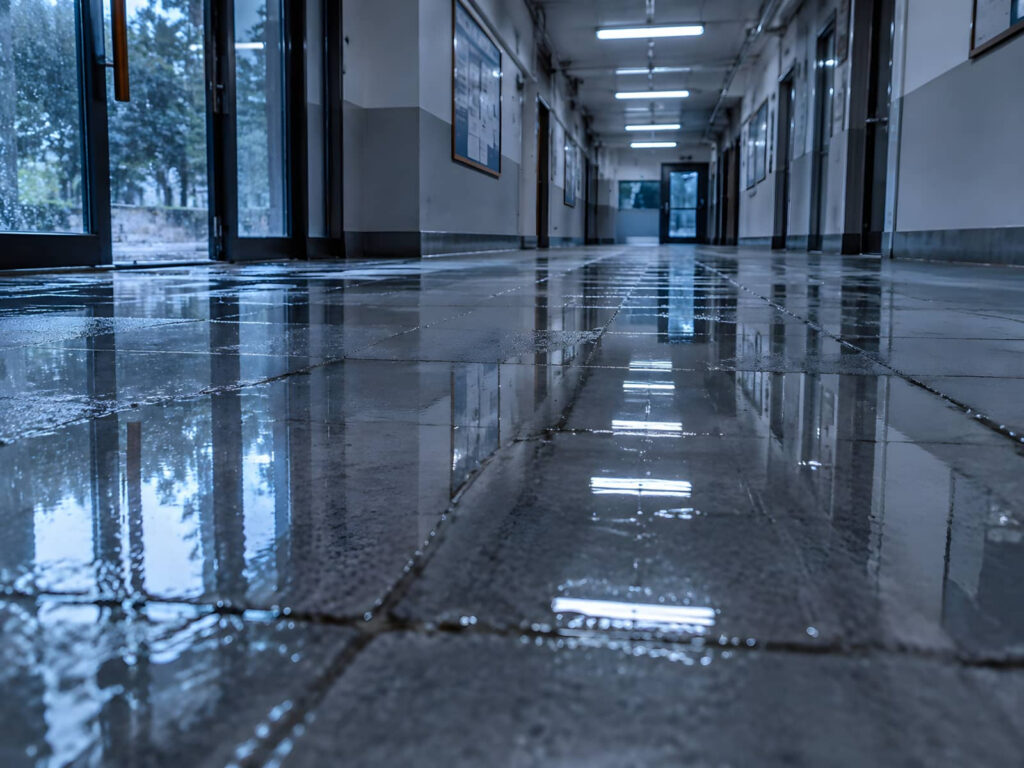
When water spreads through your facility, it can feel like a silent alarm going off in every room. You need a commercial restoration response that stops the source, assesses structural and inventory loss, extracts moisture fast, and documents every step for insurance. The right process can limit downtime, reduce mold risk, and protect your bottom line, but the real difference often comes down to what happens in the first critical hours.
Key Takeaways
- Shut off the water source, isolate the area, and move valuables to prevent further commercial damage.
- Extract standing water quickly, then use air movers and dehumidifiers to control moisture and speed drying.
- Inspect walls, floors, ceilings, and equipment for hidden damage, structural hazards, and unsalvageable materials.
- Clean and sanitize affected surfaces, remove contaminated porous materials, and monitor moisture to prevent mold growth.
- Document losses, preserve records, and hire an IICRC-certified restoration team with 24/7 emergency response.
What Commercial Water Damage Restoration Includes
Commercial water damage restoration includes rapid water extraction, moisture assessment, drying, dehumidification, and cleaning to help businesses recover after leaks, flooding, burst pipes, or stormwater intrusion.
You’ll get a structured response that identifies affected materials, documents conditions, and tracks moisture levels until they’re within acceptable limits.
Technicians use specialized pumps, air movers, and desiccant or refrigerant dehumidifiers to reduce secondary damage and limit microbial growth.
You also benefit from sanitation, odor control, and targeted repairs that support safe reoccupancy.
In commercial water damage restoration, you’re never left guessing; each step aims to restore operations, protect assets, and keep your team informed.
This process helps you feel prepared, supported, and confident as your facility returns to normal.
Stop the Water Source and Protect Your Property
Shut off the main water supply immediately to stop further intrusion and limit ongoing damage.
Isolate the affected areas to contain moisture, reduce spread, and protect adjoining spaces.
Move valuables, equipment, and documents upward to keep them clear of standing water and secondary loss.
Shut Off Main Water
Cut off the main water supply immediately to limit further damage and protect your building. You should know where the shutoff valve is before an emergency starts, and your team should too.
Turn the valve fully closed, then verify that water flow has stopped at sinks, fixtures, and equipment. If the valve won’t move or you can’t reach it safely, call building maintenance or a licensed plumber right away.
Don’t keep moving water through the system while you assess the loss. After shutdown, document the time and notify your restoration partner so they can respond fast.
Acting quickly helps your business stay in control, reduce downtime, and support a smoother recovery. In a crisis, prepared teams protect each other and their workspace.
Isolate Affected Areas
Once you’ve stopped the source, isolate the affected area to keep the loss from spreading. Close doors, set up temporary barriers, and restrict foot traffic so moisture doesn’t track into adjacent rooms.
If you can, shut down nearby HVAC zones to reduce airflow that can move contamination or humidity. Post clear signs so your team knows where not to enter, and keep access limited to trained responders.
Protect surrounding surfaces by placing absorbent mats at junctions and sealing gaps where water can migrate. This controlled perimeter helps you contain damage, preserve safe working conditions, and support faster restoration.
When everyone follows the same boundary plan, your business stays organized, your people stay safer, and your recovery team can work with fewer disruptions.
Move Valuables Upward
With the affected area contained, raise movable items to a higher, dry location to limit loss. You should prioritize records, electronics, inventory, and critical equipment, since water can cause rapid corrosion, data loss, and contamination.
Use dollies, carts, and team lifts to move items safely, and keep weight limits in mind to prevent injury. If you can’t relocate large assets, elevate them on pallets, blocks, or shelving above the moisture line.
Remove packaging, inspect for wetness, and separate salvageable materials from damaged stock. Document what you move with photos and notes for insurance and restoration coordination.
Acting quickly helps you protect continuity, reduce downtime, and keep your team aligned during recovery.
Inspect the Damage in Your Building
Start by inspecting the full extent of the damage in your building, including affected walls, floors, ceilings, and equipment. Walk each area methodically and note visible staining, warping, peeling paint, swollen trim, and compromised materials.
Check shared spaces, storage rooms, server areas, and tenant suites so your team can align on what needs attention. Document each damaged zone with dated photos and brief notes, then mark hazards such as sagging panels, exposed wiring, or unstable surfaces.
Review inventory, fixtures, and records for losses that affect operations. A careful inspection helps you prioritize repairs, support insurance claims, and keep your crew informed.
When everyone understands the scope, your business can move forward with confidence and stay connected through recovery.
Remove Water and Dry the Building Fast
Remove standing water as quickly as possible, then begin drying the building immediately to limit structural damage and mold growth. You should mobilize extraction equipment, air movers, and dehumidifiers without delay.
The faster you reduce moisture, the better you protect finishes, framing, and inventory. Work methodically so your team stays aligned and your operations can rebound sooner.
- Extract pooled water from floors
- Pull moisture from hidden cavities
- Increase airflow across affected areas
- Monitor humidity and material moisture
- Adjust equipment as conditions change
You’ll need a disciplined drying plan, because every hour matters in a commercial loss. When you act fast and stay coordinated, you help your building recover with less interruption and greater confidence.
Clean and Sanitize to Prevent Mold
Once the standing water is gone and drying is underway, you should clean and sanitize affected areas to reduce the risk of mold and secondary contamination.
Use EPA-registered disinfectants and follow label contact times on all hard, nonporous surfaces. Remove dirt, biofilm, and debris first, because residue can shield microbes from treatment.
Pay close attention to walls, framing, baseboards, and other damp surfaces where moisture lingers. If porous materials stay wet too long, mold can start fast, so inspect them closely and dispose of anything that can’t be effectively cleaned.
Maintain ventilation during work, wear proper PPE, and document each step for your restoration team.
With a disciplined process, you protect your workspace, support your crew, and keep recovery on track.
Restore Flooring, Equipment, and Inventory
You’ll need to dry flooring with the right method for the material, whether that means extraction, air movement, dehumidification, or controlled removal.
Next, you should inspect equipment, document damage, clean components, and test for safe operation before you put anything back in service.
Then, prioritize inventory recovery by separating salvageable items, stabilizing affected stock, and tracking losses for replacement or insurance.
Flooring Drying Methods
Effective flooring drying starts with rapid moisture removal, targeted airflow, and controlled dehumidification to protect structural materials, equipment, and inventory. You’ll improve outcomes when you match the drying method to the floor type and saturation level, then verify progress with moisture readings.
Keep traffic limited so you don’t trap moisture or spread contamination.
- Extract standing water quickly
- Lift carpet edges for airflow
- Use axial fans to move air
- Place dehumidifiers to balance humidity
- Monitor subfloor moisture until readings normalize
For wood, concrete, and resilient flooring, steady drying reduces warping, delamination, and odor. You’re not just drying a surface; you’re helping your workspace recover with confidence.
When you stay systematic, you protect assets, speed reopening, and keep your team aligned around a clean, controlled restoration plan.
Equipment Salvage Steps
With flooring drying underway, shift your focus to salvageable equipment and inventory before corrosion, swelling, or mold set in. You should isolate each item, document damage, and disconnect power before handling.
Wipe visible moisture from housings, racks, and casings, then use controlled air movement to dry exposed surfaces. Remove batteries, media, and detachable parts, and place them in labeled trays so you can track reassembly.
For metal equipment, apply manufacturer-approved corrosion inhibitors if needed. For electronics, don’t power them on until a qualified technician verifies insulation, contacts, and circuitry.
Pack clean, dry items on pallets or shelving to keep them off the floor. Your team can restore order faster when every item is stabilized, recorded, and protected from secondary damage.
Inventory Recovery Priorities
Once the site is stabilized, prioritize recovery in this order: structural flooring, critical equipment, then stock and records. You’ll reduce losses by moving fast, documenting damage, and coordinating with your restoration team.
Start with safe access, moisture mapping, and material sorting so your crew can work efficiently and keep your operation aligned.
- Remove unsalvageable materials
- Dry subfloors and decking
- Clean and test machinery
- Segregate viable inventory
- Verify records and chain of custody
You belong in control of the process, not reacting to it. Restore usable assets first, then inspect remaining goods for contamination, warping, or electrical risk.
With disciplined sequencing, you’ll protect continuity, preserve value, and reopen with confidence.
Work With Insurance on Your Water Damage Claim
After a water loss, you should contact your insurer quickly and document the damage before cleanup begins.
You can support your claim by taking dated photos, listing affected assets, and saving invoices, moisture readings, and mitigation logs.
Submit a clear loss summary that identifies where the water came from, when you noticed it, and what operations were interrupted.
Keep copies of every email and form so you stay aligned with your adjuster.
If your policy requires prompt notice, meet that deadline and track any coverage questions in writing.
Ask for claim guidance early so you and your team can move through the process with confidence.
Careful records help you protect reimbursement, reduce delays, and keep your recovery on course.
Choose the Right Commercial Restoration Team
Choosing the right commercial restoration team can make the difference between a fast, controlled recovery and prolonged business interruption. You need a partner that understands your facility, your timeline, and your standards.
Look for:
- 24/7 emergency response
- IICRC-certified technicians
- Advanced drying and moisture mapping
- Clear documentation for claims
- Strong references from businesses like yours
A capable team will isolate affected areas, protect equipment, and restore operations with minimal disruption.
Ask how they handle containment, sanitation, and structural drying, and confirm they coordinate with your insurer and facilities staff.
When you choose a team that works like part of your organization, you gain confidence, continuity, and a faster return to normal.
Frequently Asked Questions
How Long Does Commercial Water Damage Restoration Usually Take?
Usually, you’ll need a few days to several weeks, depending on damage severity, drying time, and repairs. You can speed recovery with quick response, but extensive flooding or structural issues extend the timeline.
Can Business Operations Continue During the Restoration Process?
Yes, you can often keep operating, though it’s rarely business as usual. You’ll need isolated work zones, safety controls, and phased drying, much like a backstage crew keeping the show running while repairs proceed.
What Safety Risks Should Employees Avoid After Water Damage?
You should avoid electrical shock, slippery floors, contaminated water, mold exposure, weakened structures, and damaged equipment. Don’t enter flooded areas, touch wet outlets, or disturb debris until you’ve verified the space is safe.
How Is Hidden Moisture Detected Inside Walls and Ceilings?
You detect hidden moisture with moisture meters, infrared cameras, and small inspection openings. You’ll identify temperature anomalies, measure damp materials, and verify wall and ceiling cavities, so your team can act quickly and confidently.
What Documents Should I Keep for the Insurance Claim?
You should keep photos, videos, repair estimates, invoices, inventory lists, moisture readings, mitigation logs, and all insurer correspondence. Save dated receipts and temporary relocation costs too, so you can substantiate losses and speed your claim.
Conclusion
Commercial water damage restoration helps you get your business back on its feet quickly and safely. When you act fast, you stop further loss, dry the structure, and reduce mold risk. Like a well-tuned machine, each step works together to protect your building, equipment, and inventory. You’ll also strengthen your insurance claim with clear documentation. Choose a skilled restoration team, and you can turn disruption into recovery with less downtime and fewer surprises.